

I’ve been tracking AI tools obsessively since 2023. I signed up for every beta. I tested every “ChatGPT killer.” I watched founders on Twitter promise to change the world with their GPT-4 wrappers. I even paid for a few of them — with my own money, like a fool.
Now it’s March 2026, and the graveyard is stacked.
According to CB Insights data, over 14,000 AI startups launched globally in 2024. By the end of 2025, roughly 3,800 of them had shut down — that’s 27%. Another 1,800 closed in early 2026. We’re looking at a 40% failure rate in under 24 months.
This isn’t a doomer take. AI is genuinely transforming how we work. But most of the companies that rode the wave in 2025 weren’t building anything real. They were building demos with Stripe integrations.
Here’s my graveyard list — the AI tools and startups that got massive hype, raised real money, and are now either dead, gutted, or desperately pivoting. Every one of these I either tracked closely, tested, or wrote about at the time.
🪦 The Graveyard: 10 AI Casualties of 2025-2026
1. Builder.ai — The $445M “AI” That Was Actually Humans
Founded: 2016 · Died: 2025 · Funding: ~$445M · Peak Valuation: $1.5B
Builder.ai was the poster child of the AI hype collapse. Backed by Microsoft and the Qatar Investment Authority, they promised anyone could build a custom app using their AI assistant “Natasha” — “as easy as ordering a pizza.” The founder literally called himself “Chief Wizard.”
The reality? Much of the “AI-powered” development was performed by hundreds of offshore human developers. Internal audits slashed their 2023-2024 revenue projections by 75%. When lenders seized $37 million of the company’s $42 million in cash, it was game over. Builder.ai entered insolvency in mid-2025.
This wasn’t just a failure. It was AI fraud. And investors with deep pockets still fell for it.
2. Humane AI Pin — $241M to Build a Gadget Nobody Wanted
Founded: 2018 · Died: February 2025 · Funding: ~$241M · Exit: Sold to HP for ~$116M
I was genuinely excited about the Humane AI Pin. Former Apple veterans building a post-smartphone device? A tiny projector on your lapel? It sounded like the future.
Then the reviews dropped. The Verge called it “bad at almost everything it does.” Battery life was terrible. The laser projector was unreadable outdoors. It was slow, unreliable, and solved zero problems better than your phone already does.
Humane burned through $230M in investor cash, sold what was left to HP for $116M, and remotely bricked every AI Pin customers had bought. If you paid $699 for one, congratulations — you now own a very expensive paperweight.
3. Rabbit R1 — The $199 AI Toy That CES Loved and Reality Killed
Founded: 2023 · Status: Functionally dead by late 2025 · Funding: ~$30M
The Rabbit R1 was the darling of CES 2024. A cute orange device with a scroll wheel that would be your AI companion. 100,000 units sold in the first few weeks of pre-orders. The hype was insane.
The product was not. Reviewers called it “an unfinished, unhelpful AI gadget.” It could barely handle basic tasks. By late 2025, employees reported not being paid for months. The company was reportedly in severe financial distress, with strikes by employees and outsourced teams. The website was still up (offering the R1 at a discount), but the company was a walking corpse.
The lesson: going viral at CES is not a business model.
4. Inflection AI (Pi) — $1.5B Raised, Then Absorbed by Microsoft
Founded: 2022 · Status: Gutted in 2024, shell by 2025 · Funding: ~$1.5B
Inflection built Pi, a chatbot that was supposed to be the “empathetic” alternative to ChatGPT. It was actually pretty good — warm, conversational, different. They raised $1.5 billion from Microsoft, Reid Hoffman, and Bill Gates.
Then in March 2024, Microsoft basically absorbed the entire company without acquiring it. Co-founders Mustafa Suleyman and Karén Simonyan left to lead Microsoft’s AI division, taking most of the engineering team with them. What remained of Inflection pivoted to enterprise API services — a completely different company.
Pi still exists in some form, but the original vision? Dead. This was less a failure and more a corporate raid disguised as a hiring spree. It showed the world that even $1.5B doesn’t protect you when Microsoft decides it wants your people.
5. Rain AI — Sam Altman’s $150M Chip Bet That Melted
Founded: 2017 · Status: Seeking buyer, May 2025 · Funding: ~$40M (Series B of $150M failed)
Rain AI wanted to build brain-inspired neuromorphic chips — a fundamentally different architecture for AI inference. Sam Altman personally invested, and OpenAI agreed to buy $51M worth of their chips. On paper, this was a moonshot with serious backers.
In reality, the US government forced their Saudi investor out over national security concerns. The $150M Series B collapsed. By May 2025, Rain was shopping itself around for a buyer, struggling to stay afloat. Building custom silicon is brutally expensive, and when your funding round evaporates, there’s no pivot that saves you.
6. Stability AI — From Open-Source Hero to Existential Crisis
Founded: 2019 · Status: Limping, massively diminished · Funding: ~$170M · Peak Valuation: ~$1B
Stability AI was supposed to be the open-source counterweight to OpenAI. Stable Diffusion was genuinely revolutionary — it democratized image generation. For a moment in 2022-2023, they were the most exciting company in AI.
Then came the financial reality. CEO Emad Mostaque resigned in March 2024. Layoffs hit 10% of staff immediately after. Revenue never matched the cultural impact. Copyright lawsuits piled up. Key researchers left for competitors. By 2025, Stability was a shadow of itself — still technically alive, but with reduced teams, struggling revenue, and an uncertain future.
The cautionary tale: you can build something millions of people love and still fail to build a business around it.
7. Jasper AI — The $1.5B AI Writing Tool That ChatGPT Made Irrelevant
Founded: 2021 · Status: Drastically diminished, pivoting to enterprise · Funding: ~$131M · Peak Valuation: $1.5B
I used Jasper in 2022 and it was magic. An AI writing assistant that actually helped marketers produce content faster. They hit $80M ARR, raised at a $1.5B valuation, and projected $250M ARR by end of 2024.
Then ChatGPT launched. And Claude. And Gemini. Suddenly, the underlying LLM that Jasper was wrapping was available to everyone for free or near-free. Jasper revised its 2023 ARR forecast down by at least 30%. The CEO was replaced. Layoffs followed. The valuation was internally slashed.
Jasper didn’t technically die — it pivoted hard to enterprise. But the $1.5B AI writing tool that marketers loved? That product is effectively dead. This is the canonical “wrapper” story: if your entire product is a UI on top of someone else’s API, you’re one product update away from extinction.
8. Noogata — Enterprise AI That Never Escaped Pilot Hell
Founded: 2019 · Died: May 2025 · Funding: $28M
Noogata had everything an enterprise AI startup is supposed to have: predictive analytics for sales and marketing, backed by Team8, signed deals with PepsiCo and Colgate. Real customers, real investors, real category.
None of it mattered. Enterprise sales cycles were longer than their financial runway. Pilot deals with big logos never converted to large-scale deployments. By 2025, they couldn’t raise a new round and shut down.
The brutal truth about “we signed PepsiCo” — it means nothing if PepsiCo is paying you $50K for a pilot that never scales to $500K.
9. Locale.ai — Death by Burnout and Honest Math
Founded: 2019 · Died: 2025 · Funding: ~$5M
This one hit different. Locale.ai built a genuinely useful geospatial analytics platform for logistics companies. They had paying customers worldwide. The product worked.
After six years of grinding — including the pandemic — the founders just… stopped. Not because the company failed dramatically, but because the math didn’t work. Enterprise sales were heavy, founder-led, and not scaling fast enough. Burnout was real. They made the principled decision to shut down rather than raise more money and grind through another cycle.
I respect this one. Not every death is a failure. Sometimes it’s just honest math meeting human limits.
10. The Unnamed Thousands — AI Wrapper Startups
For every Builder.ai or Humane, there were thousands of smaller casualties that never made headlines. The “AI resume builder” that was just GPT-4 with a template. The “AI email assistant” that added nothing over Gmail’s built-in AI. The “AI content detector” that stopped working every time OpenAI updated their models.
Between 2023 and early 2025, the AI Wrapper Boom produced an entire generation of startups that were, as one developer brutally put it: “If OpenAI shut down your API key and your startup also dies, you didn’t build a product.”
Most of these raised under $5M. Many raised nothing — just indie hackers who caught a few months of MRR before the underlying platforms ate their lunch. By 2026, the App Store and Product Hunt graveyards are littered with their remains.
📊 Why They Failed: The Patterns
After tracking all of these, the failure patterns are painfully clear:
Pattern 1: The Wrapper Trap
If your product is a UI layer on top of GPT/Claude/Gemini, you are one API update away from irrelevance. This killed Jasper’s core product, and it killed thousands of smaller tools. The moment OpenAI added custom GPTs, ChatGPT’s native capabilities expanded, or Claude got artifacts — entire categories of wrappers became pointless.
Pattern 2: Hardware Hubris
Humane, Rabbit, and Friend all bet that AI needed a new form factor. Consumers disagreed. Turns out, people don’t want another device — they want AI in the device they already have. Apple Intelligence, Google’s Gemini integration, Samsung Galaxy AI — the phone is the AI device.
Pattern 3: “AI-Washing” — Faking It Never Works Long
Builder.ai is the extreme case, but plenty of startups overstated their AI capabilities. When the tech doesn’t match the pitch deck, the reckoning is inevitable. In 2025, investors started actually testing products before writing checks. Imagine that.
Pattern 4: Platform Risk Is a Death Sentence
If your entire existence depends on one API provider’s pricing, capabilities, and roadmap — you don’t have a company, you have a feature. OpenAI, Google, and Anthropic all aggressively expanded their consumer-facing products in 2025, bulldozing the wrapper ecosystem.
Pattern 5: Enterprise Pilot Hell
Noogata is the poster child, but dozens of B2B AI startups died the same death. Big logos signed pilots. Pilots never expanded. Revenue stayed flat while burn stayed high. Enterprise AI sales require patience and capital — most startups had neither.
✅ What Survived — And Why
Not everything died. Some AI tools didn’t just survive 2025 — they thrived. Here are the top 5 tools still standing in each major category, and why they made it while thousands didn’t.
🖥️ AI Coding & Development — The Tools Developers Actually Use

While thousands of “AI code generators” died as ChatGPT wrappers, these five rebuilt how developers actually write software.
1. Cursor — The IDE That Replaced VS Code
Cursor didn’t just wrap an LLM – it rebuilt the entire coding experience around AI. Tab completion, inline editing, codebase-aware chat, multi-file refactors. By late 2025, it became the default IDE for a massive chunk of developers. The switching cost is enormous once you’re hooked. Why it survived: Deep product integration, not a chatbot bolted onto VS Code.
2. GitHub Copilot — The First Mover That Kept Moving

Copilot had the distribution advantage – baked into GitHub and VS Code, used by 1.8 million paying developers by end of 2025. While competitors came and went, Copilot kept shipping: Copilot Workspace for multi-file planning, Copilot Chat for debugging, and increasingly agentic coding flows. Why it survived: Microsoft’s distribution + GitHub’s developer lock-in = unbeatable moat.
3. Windsurf (formerly Codeium) — The Free-Tier Trojan Horse

Windsurf carved out space by offering a generous free tier and building “Cascade” – an agentic coding flow that handles multi-step tasks autonomously. They rebranded from Codeium in late 2024 and leaned hard into the AI-native editor angle. Millions of developers use it, and the free-to-paid pipeline works. Why it survived: Free tier built the user base; agentic features kept them paying.
4. Replit Agent — Build Apps by Describing Them

Replit went all-in on AI with their Agent feature – describe what you want, and it scaffolds, codes, and deploys the entire app. For non-developers and rapid prototypers, nothing comes close. They own the full stack (editor + hosting + deployment), which means no one can eat their lunch by just adding a feature. Why it survived: Vertical integration from code to deploy – no API dependency.
5. Bolt.new (StackBlitz) — The Browser-Based AI Builder

Bolt.new exploded in late 2024 by letting anyone build full-stack web apps entirely in the browser using AI. No setup, no terminal, no config files. Just describe your app and watch it build in real-time with WebContainers. Hit 1M+ users faster than almost any dev tool in history. Why it survived: Zero-friction experience that made “vibe coding” a real thing.
🧠 AI Assistants & Chatbots — The Big Models That Ate the Wrappers

Remember when every startup built a “better ChatGPT”? The platform providers crushed them all. These are the five that matter.
1. ChatGPT (OpenAI) — The 800-Pound Gorilla
Love it or hate it, ChatGPT set the standard. 200M+ weekly active users by early 2026. GPT-4o multimodal, custom GPTs, the app store, memory, canvas, voice mode – OpenAI kept shipping features that killed entire startup categories overnight. Every time they added a native capability, a hundred wrappers died. Why it survived: First-mover brand + relentless feature velocity + massive distribution.
2. Claude (Anthropic) — The Thinking Person’s AI

While everyone chased ChatGPT, Anthropic quietly built Claude into the most capable AI for serious work. Extended thinking, artifact generation, massive context windows, and Claude Code for developers. Anthropic’s focus on safety AND capability – rather than hype – paid off. By 2026, Claude is arguably the best general-purpose AI available for complex reasoning. Why it survived: Technical excellence over marketing hype – the product sells itself.
3. Gemini (Google) — The Sleeping Giant That Woke Up

Google fumbled the launch (remember Bard?), but Gemini 2.0 and the integration across Google Workspace, Android, and Search made it impossible to ignore. 2 million token context windows, native multimodal understanding, and the fact that it’s baked into products 3 billion people already use. Late to the party but brought the whole house. Why it survived: Google’s ecosystem distribution – you’re already using it whether you know it or not.
4. Grok (xAI) — The Unfiltered Wildcard

Elon Musk’s xAI raised $6 billion, built the Memphis supercomputer cluster (100K H100s), and shipped Grok with real-time X/Twitter data access. Say what you want about Musk – xAI has the compute, the data pipeline, and the distribution through X’s 500M+ users. Grok carved out the “unfiltered, real-time” niche that other models won’t touch. Why it survived: Unique data access (X firehose) + massive compute investment + built-in distribution.
5. Microsoft Copilot — AI for the Enterprise Masses

Not the sexiest AI, but arguably the most commercially successful. Copilot is now embedded in Office 365, Teams, Windows, Edge, and Bing – reaching hundreds of millions of enterprise users. Most people’s first AI experience at work isn’t ChatGPT, it’s Copilot popping up in Excel or Word. Microsoft is printing money on $30/user/month enterprise licenses. Why it survived: Enterprise distribution that no startup can replicate. Period.
🔍 AI Search — The New Way We Find Information

Google’s 25-year search monopoly finally got competition. These five are redefining how humans find answers.
1. Perplexity — The Google Killer That’s Actually Delivering

Perplexity survived because it picked a massive, underserved use case – AI-powered search – and executed relentlessly. Own indexing, citation system, and increasingly their own models. When Google’s AI Overviews launched half-baked, Perplexity was already miles ahead. 100M+ monthly visits by end of 2025. Why it survived: Not a wrapper – a full search engine with proprietary infrastructure.
2. ChatGPT Search (OpenAI) — The Conversational Search Play

OpenAI integrated real-time web search directly into ChatGPT, with citations, live data, and the ability to follow up conversationally. For millions of users, “just ask ChatGPT” replaced “just Google it.” The search results aren’t always perfect, but the UX of getting a synthesized answer with sources beats scrolling through 10 blue links. Why it survived: 200M users already there – search was a feature add, not a new product.
3. You.com — The Customizable AI Search

You.com found its niche by letting users choose which AI model powers their search – GPT-4, Claude, Gemini, or their own. Multi-model search with a clean UI, research mode for deep dives, and an API that developers love. Not the biggest player, but profitable and growing. Why it survived: Model-agnostic approach means they benefit from every model improvement.
4. Phind — Search for Developers
Phind carved out the developer search niche and owned it. Their AI understands code, documentation, and technical context in ways that general search engines don’t. When you need to debug an error or find an API reference, Phind gives you the answer with working code examples – not a Stack Overflow link from 2019. Why it survived: Niche focus on developers created a loyal, paying user base.
5. Kagi — The Paid Search Engine People Actually Pay For
Kagi proved that people will pay $10/month for search that doesn’t suck. No ads, no tracking, AI-enhanced results, and the ability to boost/block specific sites. Their “FastGPT” quick answers and “Universal Summarizer” became must-have features. Small but fiercely loyal user base that’s growing steadily. Why it survived: Aligned incentives – you’re the customer, not the product.
🎨 AI Image & Creative — Where Art Meets Algorithm

While Stability AI crumbled, these five turned AI image generation into real businesses that creatives actually rely on.
1. Midjourney — Community as Moat

While Stability AI struggled to monetize open-source, Midjourney built a premium, community-driven image generation business. Discord-native approach created lock-in. Consistent quality improvements kept users paying. No VC money, profitable from early on. V6+ quality is stunning. The anti-Stability playbook. Why it survived: Bootstrapped profitability + community moat + relentless quality.
2. DALL-E / GPT Image Gen (OpenAI) — Image Gen Inside ChatGPT
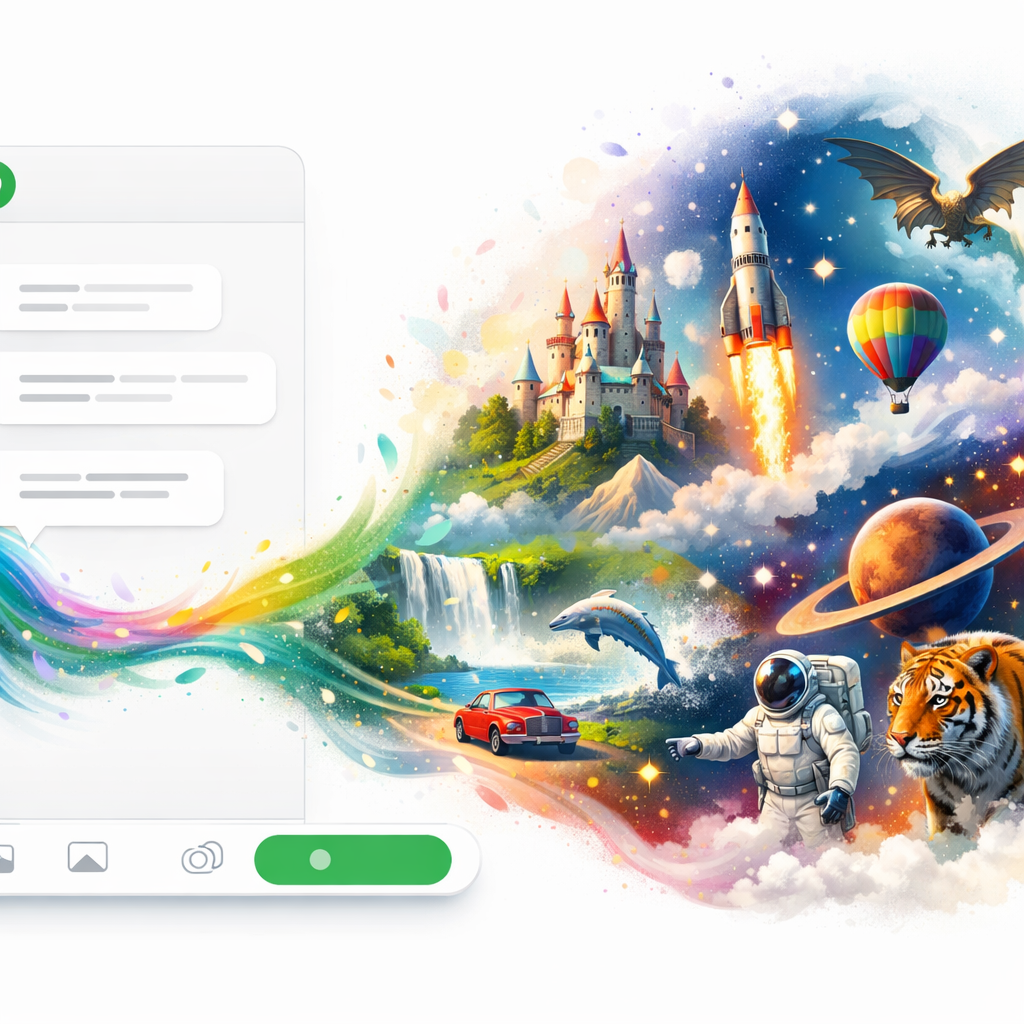
OpenAI’s image generation evolved from DALL-E 3 to native GPT-4o image creation – and it went absolutely viral. The ability to generate images inside ChatGPT with conversational control (edit this, change that, add text) made it the most accessible image gen tool ever. The “Ghibli filter” moment showed what happens when 200M users get image gen for free. Why it survived: Baked into the world’s most popular AI app – zero friction.
3. Adobe Firefly — The Enterprise-Safe Choice

Adobe played the long game: train on licensed content only, offer IP indemnification, and integrate AI into Photoshop, Illustrator, and Premiere. For any business that cares about copyright liability (which is all of them), Firefly is the only safe choice. Generative Fill in Photoshop alone justified the subscription for millions of creatives. Why it survived: IP-safe training + deep Creative Cloud integration = enterprise default.
4. Ideogram — The Text-in-Image Champion
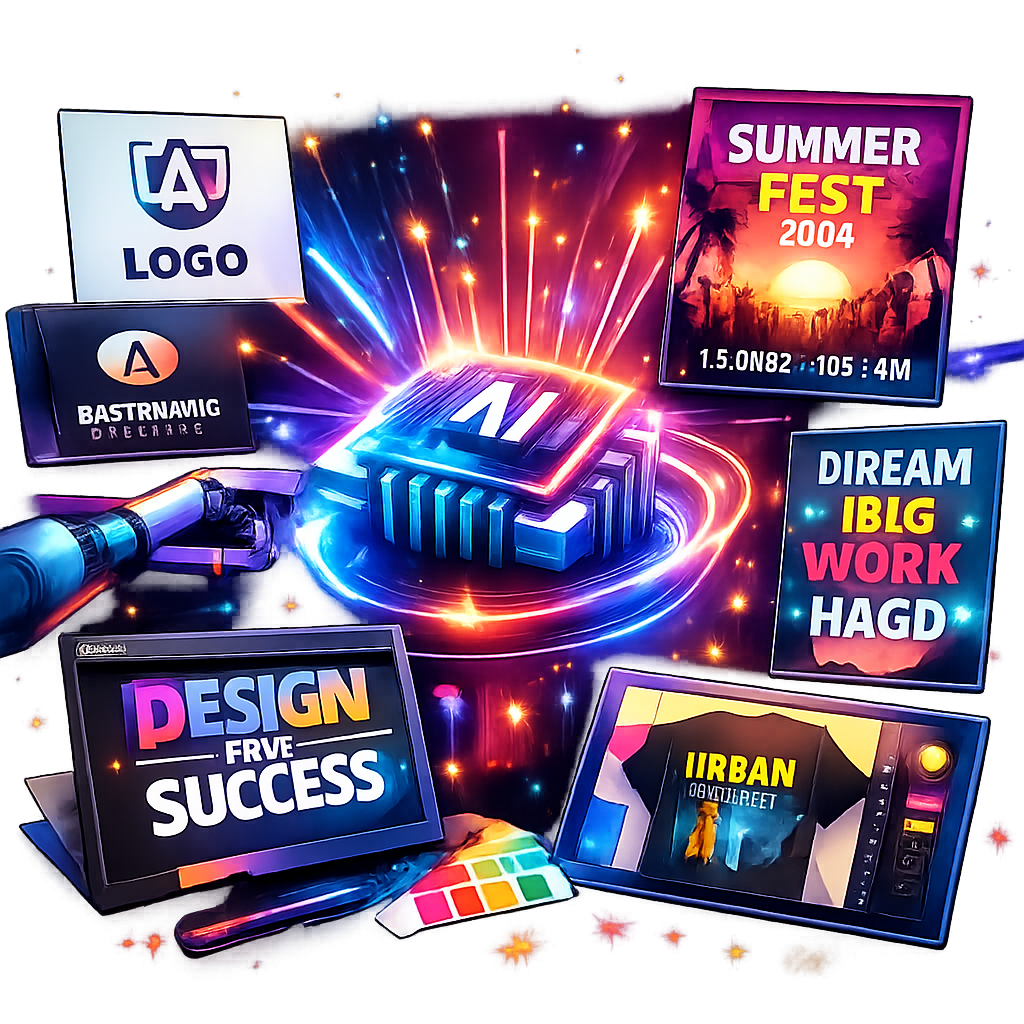
Ideogram cracked what every other model couldn’t: rendering text in images accurately. Logos, posters, social media graphics, merchandise designs – anything that needs readable text. While Midjourney still garbles letters, Ideogram nails them. Version 3.0 also matched Midjourney on photorealistic quality. Why it survived: Solved a specific, high-value problem no one else could.
5. Flux (Black Forest Labs) — The Open-Source Successor

When Stability AI faltered, Black Forest Labs (founded by ex-Stability researchers) picked up the open-source mantle with Flux. Flux.1 models became the go-to for local generation, fine-tuning, and custom pipelines. They learned from Stability’s mistakes: keep a lean team, monetize via API, and let the community do the distribution. Why it survived: Open-source done right – lean team, API revenue, community distribution.
✍️ AI Writing & Content — What Survived the Wrapper Apocalypse

Jasper’s fall was the warning shot. These five survived because they built more than a prompt template with a subscription page.
1. Notion AI — AI Inside the Workspace You Already Live In

Notion didn’t build a standalone AI writing tool – they embedded AI into the workspace millions already used daily. Summarize meeting notes, draft from templates, Q&A across your entire workspace, auto-fill databases. The AI isn’t the product; it’s a superpower added to a product people were already paying for. Why it survived: AI as a feature of an essential tool, not a standalone wrapper.
2. Copy.ai — From AI Writer to GTM Automation

Copy.ai almost died the Jasper death. Then they pivoted hard – from AI copywriting to full go-to-market workflow automation. Prospecting, outreach sequences, competitive intel, sales enablement. The writing is still there, but it’s now part of an end-to-end revenue pipeline. Smart pivot. Why it survived: Pivoted from commodity writing to high-value GTM workflows before it was too late.
3. Writer — Enterprise AI with Guardrails

Writer bet on enterprise from day one: brand voice consistency, compliance guardrails, custom AI models trained on company data, and SOC 2 compliance. While Jasper chased SMBs with ChatGPT wrappers, Writer locked in Fortune 500 contracts. Their Palmyra models give them independence from OpenAI. Why it survived: Enterprise-first with proprietary models – not dependent on any single API.
4. Grammarly — The AI Writing Tool That Was AI Before AI Was Cool

Grammarly had 30 million daily users before ChatGPT existed. When the AI wave hit, they layered generative AI on top of their existing grammar/style engine – and it worked because users already trusted them. GrammarlyGO for drafting, tone rewriting, and contextual suggestions across every app. The installed base is the moat. Why it survived: 15+ years of trust + existing distribution across every browser and app.
5. Writesonic / Chatsonic — The SEO Content Machine

Writesonic survived where Jasper didn’t by going hard on SEO content and real-time data. Chatsonic (their chatbot) pulls live info from the web, and their article writer generates long-form SEO content with actual keyword research built in. They also went multi-model early – GPT-4, Claude, Gemini – so they’re never dependent on one provider. Why it survived: SEO workflow integration + multi-model flexibility kept it relevant.
What the Survivors Have in Common
- Deep product moats – not just an API call wrapped in a UI
- Genuine workflow integration – they changed how people work, not just added a chatbot
- Proprietary technology or data – something an API update can’t replicate
- Sustainable business models – actual revenue, not just growth metrics
- Relentless iteration – shipping improvements weekly, not quarterly
🔧 Lessons for Builders: What This Graveyard Teaches Us
If you’re building an AI product right now, here’s what I’d tattoo on my wall:
1. Own Your Intelligence Layer
Don’t just call an API. Fine-tune models. Build proprietary datasets. Create evaluation pipelines. The tools that survived all have something that makes them better than raw GPT-4 at their specific task. If you can’t articulate what that is, you’re a wrapper.
2. Solve a Workflow, Not a Prompt
Cursor doesn’t just “chat about code.” It understands your codebase, edits files in place, handles multi-step refactors. The value is in the workflow transformation, not the AI response. Build tools that change how people work, not just add a chatbox to an existing flow.
3. Build for Retention, Not Virality
Every dead tool on this list had a viral moment. Rabbit R1 sold 100K units in weeks. Humane had magazine covers. None of it mattered because people stopped using the product within weeks. Optimize for day-30 retention, not day-1 signups.
4. Hardware Is a Trap (For Now)
Until AI needs capabilities that phones literally cannot provide, dedicated AI hardware is a losing bet. The phone has the screen, the connectivity, the app ecosystem, and the user habit. You’re not fighting a device — you’re fighting decades of behavioral lock-in.
5. Revenue > Hype, Always
Builder.ai had $445M in funding and a $1.5B valuation. They also had fraudulent financials and no real AI. Midjourney bootstrapped to profitability with no VC money. The market is finally rewarding the Midjourneys and punishing the Builder.ais. It took too long, but we’re here.
6. Be Honest About What Your AI Does
The “AI-washing” era is ending. Users are more sophisticated now. They can tell the difference between genuine AI capability and a prompt template. If your product is 80% human labor behind the scenes, either own that or fix it — don’t market it as AI magic.
The Bottom Line
2025 was the year the AI hype bill came due. Billions of dollars in funding evaporated. Thousands of startups died. Some deserved it (Builder.ai). Some didn’t (Locale.ai). And some are still technically alive but functionally irrelevant (looking at you, Jasper).
But here’s the thing — the tools that survived are genuinely incredible. Cursor has transformed how I code. Claude has become my daily thinking partner. Perplexity has replaced 80% of my Google searches. These aren’t hype — they’re tools I’d pay double for.
The AI revolution is real. The AI startup bubble was also real. Both things can be true at the same time.
The graveyard of 2025-2026 isn’t a story about AI failing. It’s a story about bad businesses failing — and that’s exactly how it should work. The cream rose to the top. The wrappers got unwrapped. The fakers got exposed. And the builders who shipped real value? They’re just getting started.
Rest in peace, AI Pin. You were weird and beautiful and completely useless. 🪦
Nik Sai tracks AI tools, SaaS trends, and tech failures at BetOnAI.net. Follow for more brutally honest takes on what’s working and what’s dead in AI.


How we score: read the methodology
